
The Power of Linework in Art: Unlocking Creativity

Updated: Apr 29
Linework in art is more than just sketching or outlining—it's a powerful tool that brings depth, personality, and energy to your work. By varying textures, line weights, and drawing techniques, linework can give your art a unique spark that captivates the viewer.
Exploring Linework Tools and Techniques
In this blog, we’ll explore:
Different traditional and digital linework tools
Techniques to create dynamic, engaging lines
How to use linework to enhance your compositions
Approaches to inking that suit your style
Whether you're a beginner picking up a pen for the first time or a seasoned artist refining your voice, these tips and insights can help elevate your work and unlock new levels of creativity.
Understanding Linework: The Foundation of Art
At its core, linework is the use of lines to build an image or convey an idea. It's one of the most fundamental elements in art—used to define shapes, create textures, suggest movement, and express emotion.
How Linework Functions in Artwork
Defining Form and Structure: Lines are essential for outlining shapes and building the framework of your design. Whether you're sketching characters, architecture, or abstract forms, precise linework brings clarity and structure to your visual ideas.
Creating Texture and Patterns: By varying the thickness, length, direction, and spacing of your lines, you can create detailed textures and complex patterns. From soft crosshatching to bold stippling, these techniques add surface detail and tactile quality to your piece.
Conveying Emotion and Movement: The character of your lines—whether they’re loose and flowing or sharp and jagged—can express mood and energy. A dynamic line suggests motion, while a smooth curve can evoke calm. These subtleties help bring your subject matter to life.
Why Linework Matters
Strong, intentional linework can elevate your art by:
Making it visually compelling
Clarifying form and depth
Directing the viewer’s eye
Communicating emotion and intent
In a world full of visual noise, confident linework can set your art apart and make your personal style shine through.
Tools and Materials for Linework Mastery
Traditional Linework Tools
Pencils
Graphite Pencils: Available in varying grades of hardness (e.g., H, B, HB), allowing for a wide range of line weights and tonal values.
Pastel Pencils: Great for detailed linework and blending; suitable for creating soft, textured effects.
Brushes and Inks
Brushes: Offer expressive strokes and a wide range of thicknesses, especially when used with ink.
Dip Pens: Allow for fine line variation and the use of various ink colors; require steady hand control.
India Ink: Permanent, waterproof, and ideal for clean, detailed linework.
Other Traditional Materials
Vellum Paper: A toothy surface excellent for pencils, pastels, and ink; helps capture texture and depth.
Foam Core Boards: Useful for mounting finished artwork or creating a stable drawing surface.
Light Tables: Helpful for tracing, refining sketches, and producing clean final lines.
Digital Linework Tools
Digital Pens and Brushes
Pen Tools: Software like Clip Studio Paint, Adobe Photoshop, Procreate, etc. offer a wide range of pen styles—from smooth to textured.
Brush Settings: Adjusting flow, opacity, shape dynamics, and smoothing helps customize stroke quality.
Techniques for Clean Digital Linework
Line Confidence: Practice using long, smooth strokes from the elbow rather than short, scratchy ones.
Stabilization Tools: Built-in line smoothing options can help beginners create cleaner lines.
Line Weight Variation: Use thicker lines for outlines and foreground elements, thinner lines for detail and background—just as you would traditionally.
Techniques for Fluid Linework
Fluid linework doesn’t happen by accident—it’s the result of practiced control, intentional movement, and a strong connection between your hand and your eye. Whether you're working digitally or traditionally, developing smooth, expressive lines takes time and mindful technique. Here are key strategies to help you refine your linework:
Practice Continuous Line Drawing
Continuous line drawing involves creating an image without lifting your pen or pencil from the page. This exercise trains your hand to move with confidence and helps reduce hesitation or stiffness in your lines.
Focus on flow over precision—don’t worry about perfection.
Use this as a warm-up to loosen up your hand.
Try contour drawings of simple objects or your hand.
Try using ink to keep yourself from erasing.

Goal: Build hand-eye coordination and develop smoother, more intentional strokes.
Use Varying Pressure for Dynamic Lines
Applying different levels of pressure as you draw results in line weight variation—thicker or thinner lines depending on how firmly you press. This adds rhythm, movement, and dimensionality to your work.
Light pressure = thin, delicate lines (great for detail or background elements).
Heavy pressure = bold, expressive strokes (ideal for foreground or focal points).
Tip: If you're using digital tools, explore pressure sensitivity settings on your stylus for similar effects.
Incorporate Gestural and Deliberate Movements
Gesture drawing focuses on the overall movement and flow of a subject rather than its fine details. Practicing gestures allows you to capture life, energy, and form with loose, expressive lines.
Draw with your whole arm, not just your wrist.
Move quickly and fluidly—focus on the motion of the subject.
Combine gesture with structure for more dynamic results.
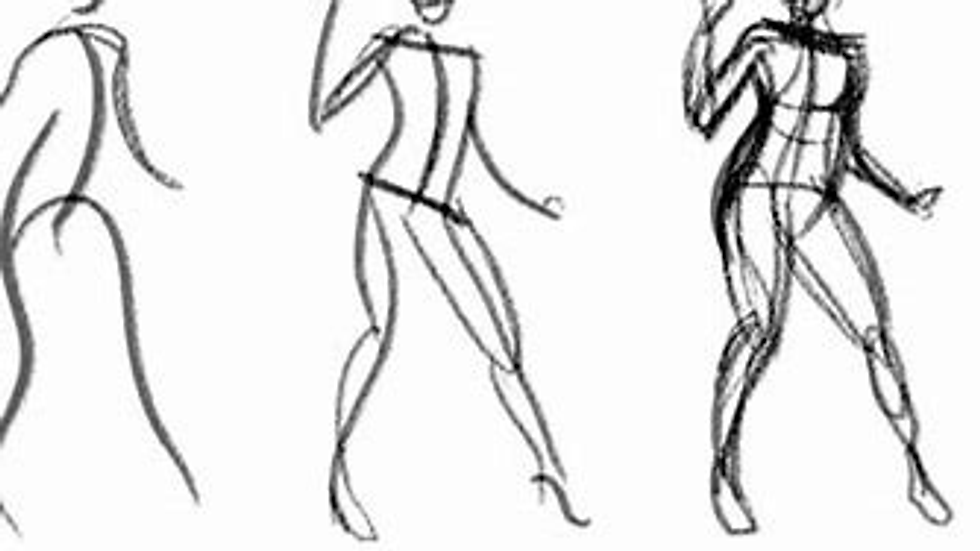
Benefit: This encourages looseness and boldness when drawing and prevents your linework from feeling rigid or mechanical.
Warm Up with Sketches Before Inking
Jumping straight into a final piece can lead to tight, hesitant lines. Taking time to warm up allows your muscles and mind to adjust, making your strokes more confident and fluid.
Start with loose shapes or quick poses.
Redraw key forms to refine your sense of proportion and line flow.
Explore different textures or patterns as warm-ups, too.
Think of it like stretching before a workout—your best performance comes after you're warmed up.
Mastering fluid linework is all about repetition, observation, and mindful practice. Incorporating these techniques into your regular routine will help your lines feel more expressive and natural.
Creating Depth Through Linework
Linework is essential for establishing form, space, and movement in two-dimensional artwork. Mastery of line quality can greatly enhance visual impact and storytelling.
Utilizing Different Line Weights
Varying the thickness of lines creates a visual hierarchy and spatial depth.
Thick lines suggest objects are closer or more important.
Thin lines push objects into the background.
Mid-weight lines are useful for middle-ground elements.

This also supports the illusion of light and shadow without using values and colors.
Overlap and Intersecting Lines
Overlapping objects with clear linework builds spatial relationships and depth.
Show which object is in front by layering.
Vary or break lines to suggest one object passing behind another.
Intersections can define complex shapes or forms with transparency.
Perspective Lines and Dimensionality
Perspective gives structure and realism to your composition.
One-point perspective: Ideal for frontal scenes and simple depth.
Two-point perspective: Adds dynamism to angles and architecture.
Three-point perspective: Introduces dramatic verticality and scale.
Even in stylized pieces, perspective cues help anchor the composition in space.
Adding Visual Interest with Linework
Patterns and textures created with lines can add rhythm, character, and detail to a piece. They bring surfaces to life and give viewers something to explore up close.
Use repeated motifs (dots, crosshatching, waves, spirals) to build texture.
Vary line direction and density to create contrast between smooth and rough areas.
Imply material surfaces (wood grain, fabric folds, scales) using expressive line styles.
Mix organic and geometric patterns to contrast natural and structured elements.

These techniques can transform flat areas into richly detailed surfaces, giving the viewer more to look at and enhancing the storytelling of the piece.
Strategies for Balancing Complexity and Simplicity in Designs
Too much detail can overwhelm the viewer, while too little may make a piece feel unfinished. Balance is key.
Use focal points: Apply intricate linework to areas you want to draw attention to, and keep surrounding areas simpler to give the eye a rest.
Vary levels of detail across the composition to create movement and hierarchy.
Simplify background elements to make the foreground stand out.
Use clean, bold lines sparingly to contrast with areas of dense patterning.

This balance helps maintain clarity in the artwork and ensures the viewer’s attention is guided intentionally rather than scattered.
The Role of Negative Space in Enhancing Linework and Visual Interest
Negative space: the empty or unmarked areas of a composition; is just as important as the lines themselves. It helps define forms, create breathing room, and emphasize contrast.
Use negative space to shape and define objects without fully outlining them.
Let lines "fade out" or break to allow space for the viewer’s imagination.
Create silhouettes or suggest forms by outlining only key contours and leaving the rest implied by space.
Balance filled and empty areas to prevent visual overload.

Negative space adds elegance and sophistication to a piece. It invites viewers to engage more actively with the image and fills the composition with tension and harmony.
Adding visual interest through linework involves more than just adding details, it’s about making thoughtful decisions. Through texture, pattern, balanced design, and the use of space, artists can create compelling works that are both rich in detail and visually coherent.
Color and Linework: A Harmonious Relationship
Combining color with linework opens up a world of expressive possibilities. When used thoughtfully, color can enhance your lines rather than compete with them.
Planning the Interaction of Color and Linework
Plan the interaction: Decide whether the color will sit beneath, alongside, or within your lines.
Use color to support, not overshadow: Keep your palette harmonious so the linework still leads the composition.
Experiment with transparency: Watercolor, washes, or light digital layers can add vibrancy without drowning the lines.
Try limited palettes: A few well-chosen colors can complement your lines and unify the artwork.
Exploring Color Theory Concepts That Complement Line Quality
Warm vs. Cool: Use warm colors (reds, oranges) to bring line elements forward, and cool colors (blues, greens) to push them back.
Color harmony: Monochromatic or analogous color schemes keep the focus on the linework while enhancing the emotional tone.
Complementary colors: Pair opposite hues (like blue and orange) to make linework pop when layered.
Value contrast: Use light and dark values strategically—dark lines on a light background or vice versa can dramatically affect visibility and mood.
Techniques for Maintaining Line Clarity When Adding Color
Inking last: Lay down color first, then redraw your linework on top to ensure clarity.
Digital layers: Keep color and line on separate layers so adjustments can be made without compromising either.
Avoid muddy colors: Clean, well-placed color helps lines stand out; murky tones can obscure detail.
Use outlines selectively: You don’t have to outline everything. Leaving some areas without lines lets color take the lead where needed.
Developing Your Unique Style Through Linework
Finding your artistic voice is a personal and evolving journey. Linework is often a signature part of an artist's identity, and your style will develop over time through exploration, observation, and practice.
Experimenting with Tools and Techniques
Try new tools: From pens and brushes to digital tablets, different media influence how you use lines.
Break the rules: Don’t be afraid to distort proportions, vary pressure, or create "messy" lines—your quirks are part of your voice.
Explore different subjects: From portraiture to abstract to environments—every genre teaches you something new about line behavior.
Reflection on How Fluid Linework Evolves Through Practice
Repetition builds confidence: The more you draw, the more natural your lines will feel.
Mistakes become intentional: What once felt like errors can become part of your aesthetic.
Line economy improves: With experience, you’ll find ways to say more with fewer strokes.
Your linework will gradually reflect your personality—sometimes energetic, sometimes delicate—but always uniquely yours.
Importance of Studying Various Artists for Inspiration
Observe how others use lines: Some artists use heavy outlines, others barely any. Look for what resonates with you.
Analyze techniques: Study how color interacts with lines, how textures are built, or how negative space is used.
Blend influences: Don’t aim to copy. Combine your favorite elements from different artists into something new.
Studying a variety of styles opens you up to new approaches and helps you identify what truly excites you about art.
Final Thoughts on Linework and Artistic Growth
Creating expressive and dynamic linework is a powerful way to bring depth, texture, and personality into your art. Let’s quickly recap the core concepts we’ve explored:
Key Takeaways
Depth Through Linework: Use varied line weights, overlapping forms, and perspective lines to create a convincing sense of space.
Adding Visual Interest: Incorporate textures, patterns, and negative space thoughtfully to balance complexity and simplicity.
Color and Linework: Use color to complement, not compete with, your lines. Apply color theory and keep line clarity through smart layering.
Developing Your Style: Stay open to experimentation, study other artists, and embrace the evolving nature of your linework as you grow.
Keep Practicing and Exploring
The more you draw, the more natural and fluid your lines will become. Don’t be afraid to make mistakes, try new tools, or push your creative boundaries. Every sketch, stroke, and scribble helps shape your artistic voice.
Share Your Progress
Your journey is worth celebrating! Whether you're just starting or refining your personal style, consider sharing your work:
Join art communities or forums
Post progress shots on social media
Start a sketchbook blog or portfolio
Seeing your own growth, and getting feedback can be incredibly motivating.
Remember: Every line you draw is a step forward. Keep going, stay curious, and let your creativity lead the way.
Conclusion: The Ongoing Journey of Art
Art is not a destination—it's a lifelong journey of exploration, learning, and self-expression. As you continue to develop your linework and artistic skills, remember that growth comes with time, patience, and a willingness to keep creating, even when it's challenging.
Persistence and Experimentation Are Key
Fluid, expressive linework doesn’t happen overnight. It takes:
Consistent practice to build control and confidence
Curiosity to try new tools, styles, and subjects
Courage to make mistakes and learn from them
Every sketchbook page, every failed attempt, and every breakthrough adds to your evolution as an artist.
Stay Inspired and Keep Learning
Keep exploring new techniques, study the work of artists you admire, and don’t be afraid to step outside your comfort zone.
You're Not Alone—Join the Creative Conversation
The artistic community is full of support, feedback, and encouragement.
Keep drawing. Keep exploring. Keep growing.
Your artistic voice is already inside you! Line by line, you're bringing it to life.
That's all for this month kits, see you next time. Stay Clever.

Comments